

Starting or Finding a Muslim Book Club
Formats that last, reading themes from seerah to contemporary Muslim authors, how to keep a club going past the third month, and how to run sign-ups on Ummah.
What these clubs look like
A Muslim book club is a small group, usually six to fifteen people, that reads the same book over a month or two and meets to talk about it. Some meet in a masjid classroom after Isha, some in a living room or a cafe, and some over video. Many run as a sisters' club or a brothers' club, and youth clubs are common at masajid with a weekend school.
What makes it a Muslim club rather than a book club with Muslim members is the shelf: seerah and Islamic history, classical texts read in translation, memoir and fiction by Muslim authors, and the occasional book from outside the tradition read with an Islamic lens. The best clubs alternate, so a heavy read is followed by a lighter one.
Finding one
Clubs are small and rarely advertised beyond the community that hosts them, so look where the communities are.
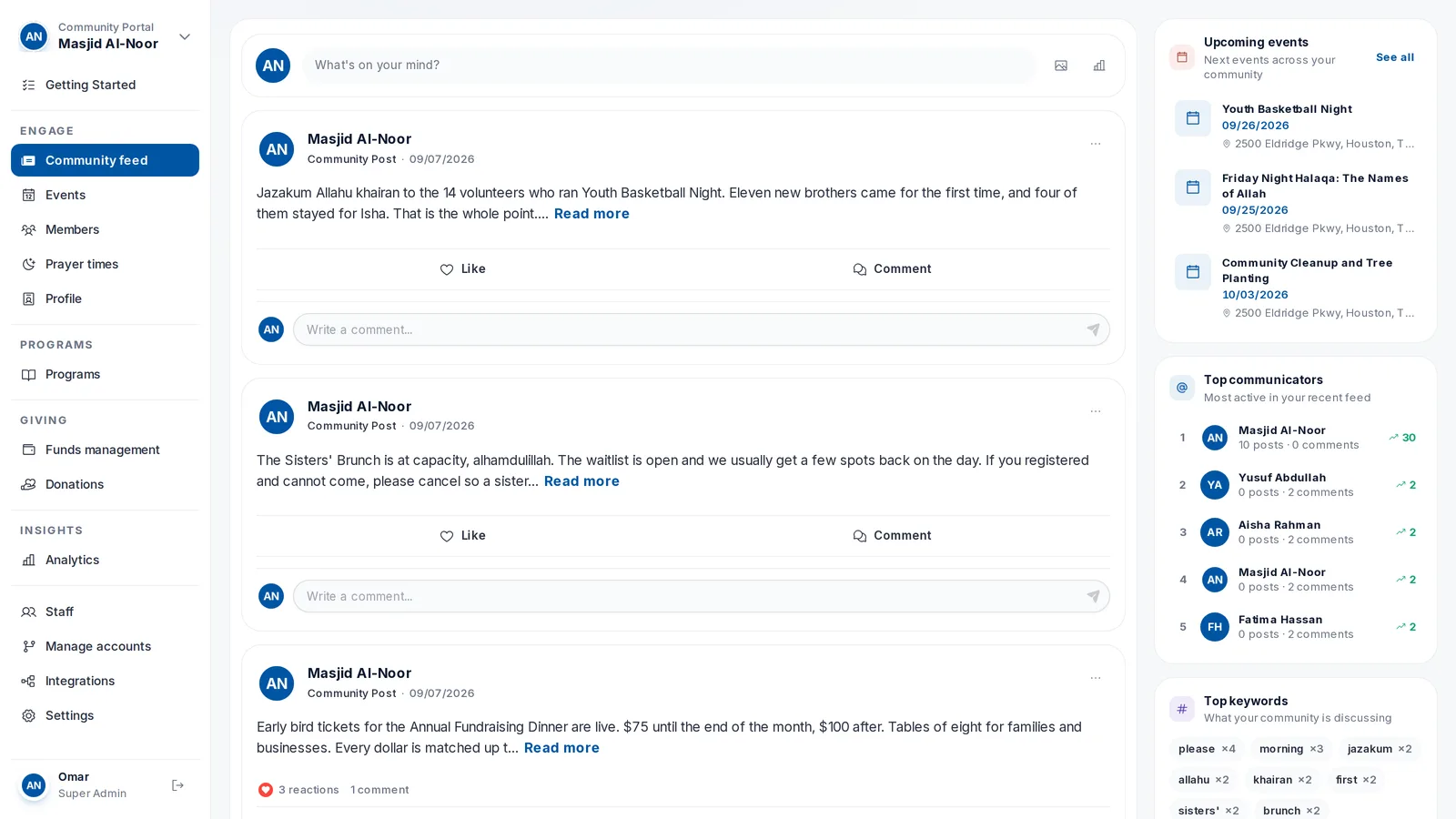
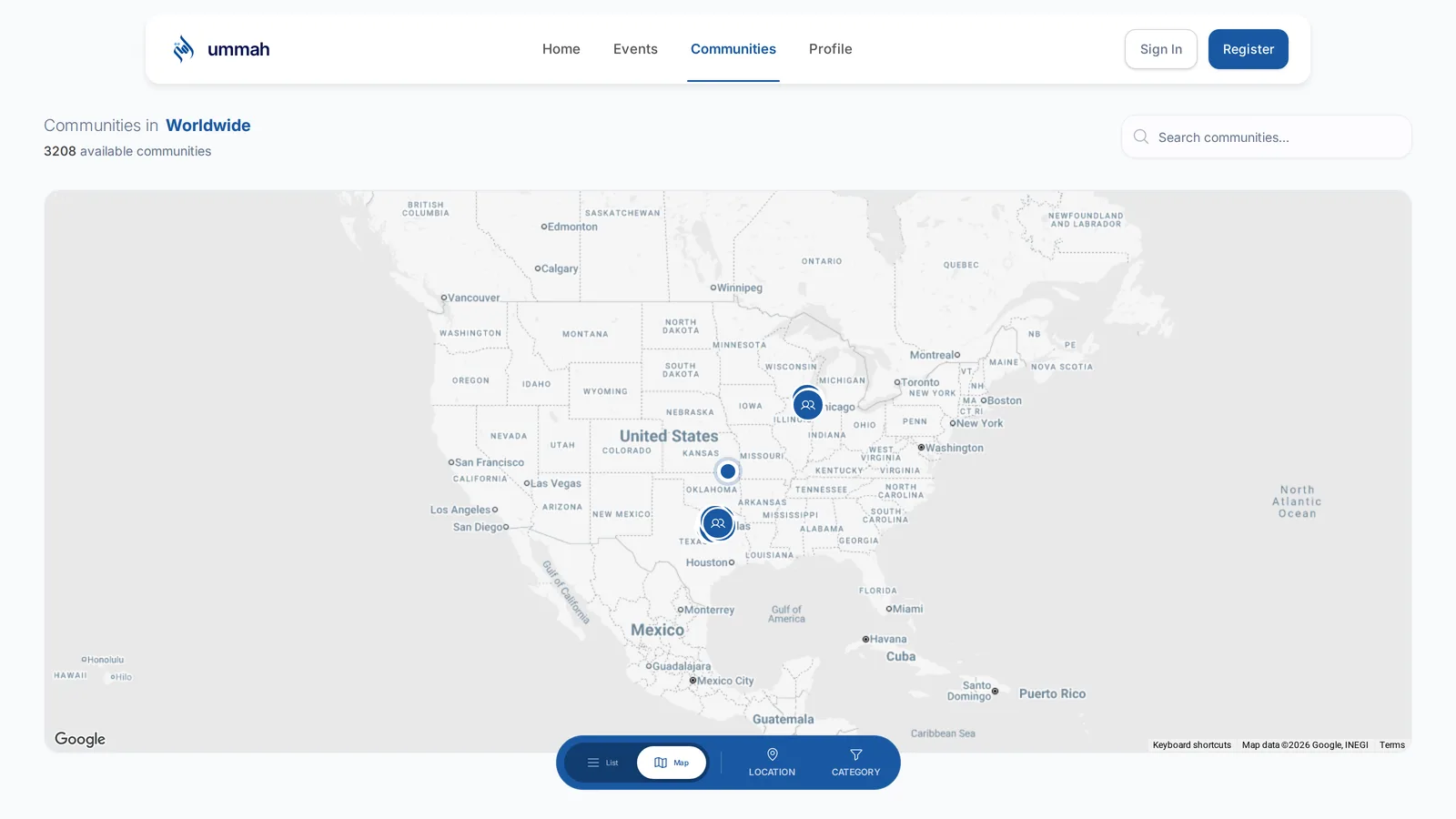
- The Ummah app lists the programs and recurring events communities near you have published, and a club run through a masjid or an Islamic center will usually be there.
- The web directory on theummah.io covers 3,000+ masajid and organizations by metro. The ones with a library or a sisters' committee are the likely hosts.
- Ask at the masjid bookstore or the weekend school office. Many clubs still exist only by word of mouth.
- If there is none, start one. Two friends and a book is enough to begin, and the third person turns up once you have a date.
Formats that last
Clubs usually fail by month three, not month one. The format is what carries them past it.
- Monthly, same day, same place. A rotating venue or a poll every month is how a club dies.
- One facilitator per book, who reads ahead and brings five questions. Rotate the role so it is never one person's burden.
- Shorter books than you think. Two hundred pages a month is realistic for people with jobs and children. A classical text can be read a chapter per meeting instead.
- A fixed hour and a hard stop, with tea after for those who want to stay.
- Online clubs need the same rules, plus cameras on and a cap of about twelve so everyone speaks.
Running it on Ummah
Ummah does not run book clubs. It is where the hosting masjid or organization publishes one so people in the city can find it, and where the sign-ups and the schedule live instead of in a group chat.
- Publish the club as a program with a session per meeting and a capacity, so a new member registers once for the season rather than RSVPing every month.
- Or publish it as a recurring event when it is open to drop-ins, free on every plan, with an RSVP so the facilitator can count chairs.
- Messages to everyone enrolled from the program's own page, so a change of book or venue reaches the whole club.
- It shows on your free Community Page, in the Ummah app and on your city's events page, next to the masjid's classes and iftars.
What to read
A good first year alternates themes rather than genres: a seerah or the biography of a companion, then a contemporary novel or memoir by a Muslim author, then a book of Islamic history, then a short classical text on the heart read in translation, then something current from outside the tradition, discussed from inside it.
Let the facilitator for the month choose within the theme, and keep a running list of what the club has read. Ask a local teacher once a year for two recommendations.